
Occupational Health Services
Healthy employees are the foundation of a productive workplace.
Our Occupational Health Physiotherapy service focuses on preventing and managing work-related injuries while helping workers return to their jobs safely, confidently, and sustainably.
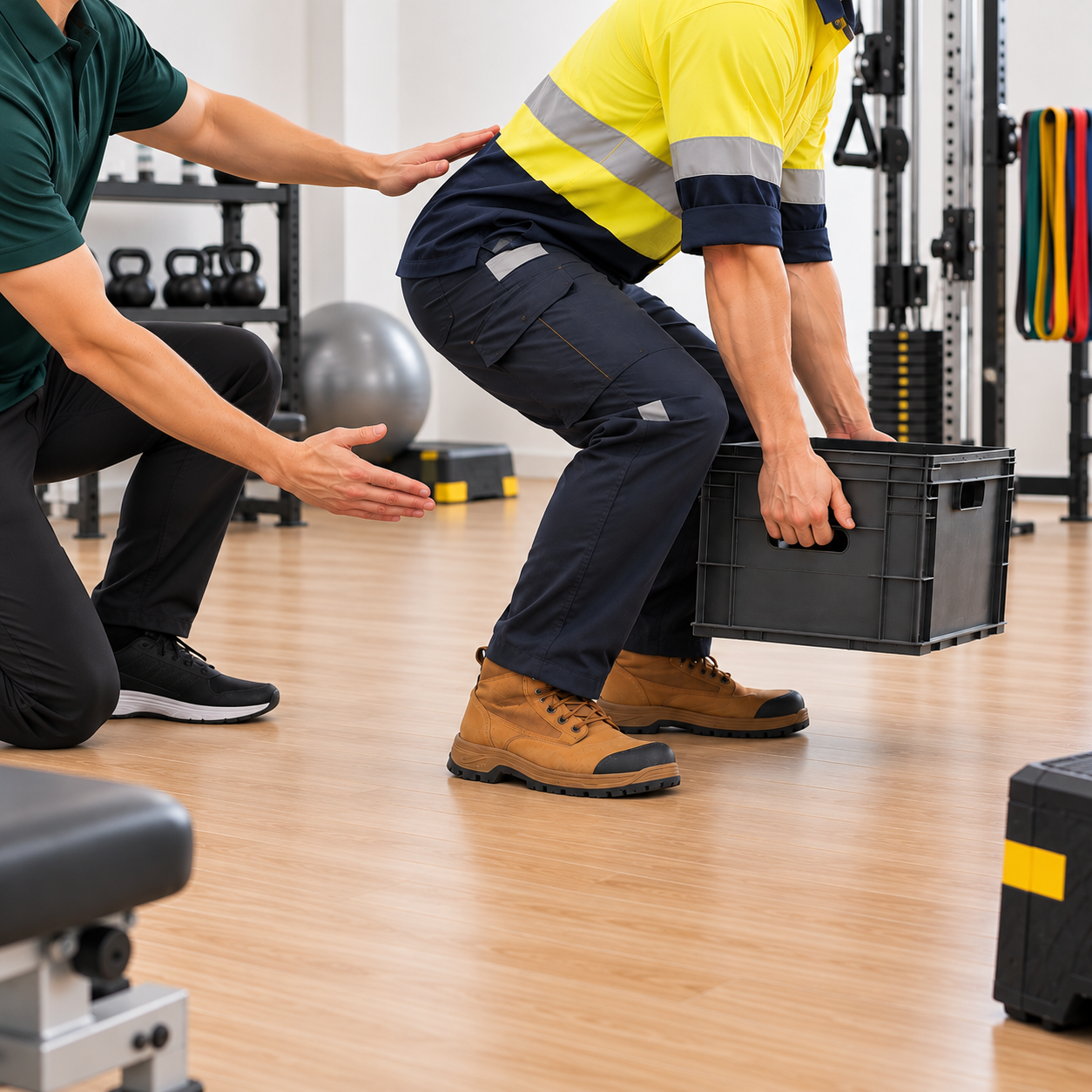
Unlike traditional rehabilitation that focuses primarily on managing symptoms, occupational health physiotherapy aims to restore your ability to safely meet the physical demands of your job. Treatment may include hands-on therapy, targeted strengthening, manual handling education, ergonomic advice, work-specific conditioning, and functional rehabilitation that replicates real workplace tasks.
We also offer workplace assessments, functional capacity evaluations, return-to-work planning, drug & alcohol testing, audiometry testing, and pre-employment screening to support both workers and employers in reducing injury risk and promoting long-term health at work.
What sets us apart is our real-world occupational health experience. Our Principal Physiotherapist has worked onsite across a wide range of industries and has extensive experience managing WorkCover claims as a Return to Work Coordinator. This practical insight allows us to work closely with employers, insurers, rehabilitation providers, and treating doctors to deliver coordinated care and achieve the best possible return-to-work outcomes.
Pre-Employment Screenings (PES)
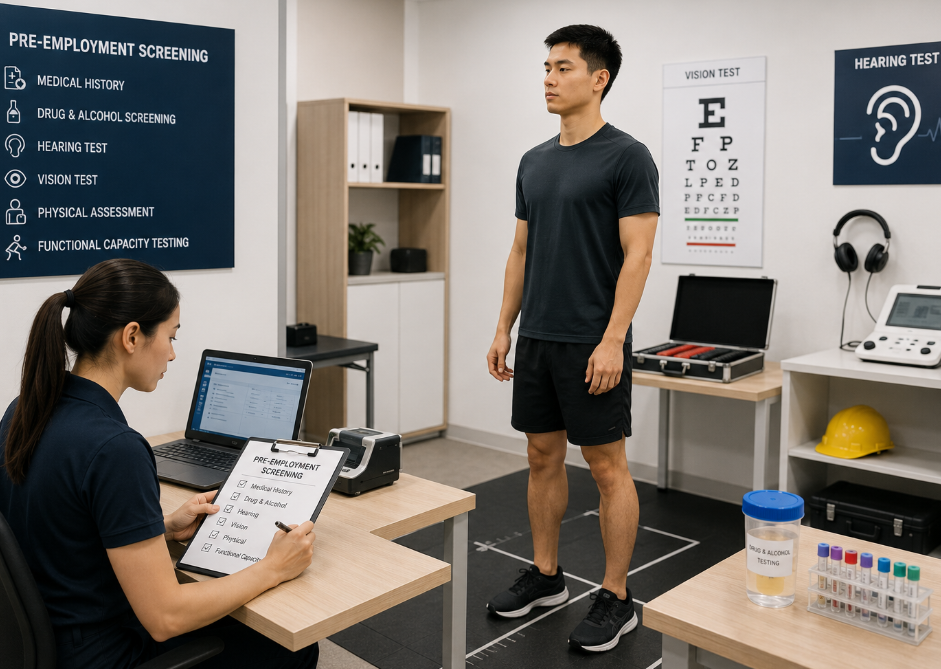
Our Pre-Employment Screening (PES) provides a comprehensive assessment to determine whether a candidate can safely meet the inherent physical requirements of a role.
Depending on the employer's requirements, assessments may include
Medical history questionnaire
Cardiovascular check (heart rate, blood pressure)
Skin check
Height, Weight, Body Mass Index
Drug and alcohol screening
Hearing and vision testing
Full body musculoskeletal screening
Manual handling assessment
Basic functional capacity assessment
Tailored / job-specific functional capacity assessment
Following the assessment, employers receive a clear, objective report with efficient turnaround times to support informed hiring decisions, reduce the risk of workplace injuries, and promote a safer, healthier workforce. Where appropriate, practical recommendations are provided to assist with safe job placement and injury prevention.
Functional Capacity Evaluations (FCEs)
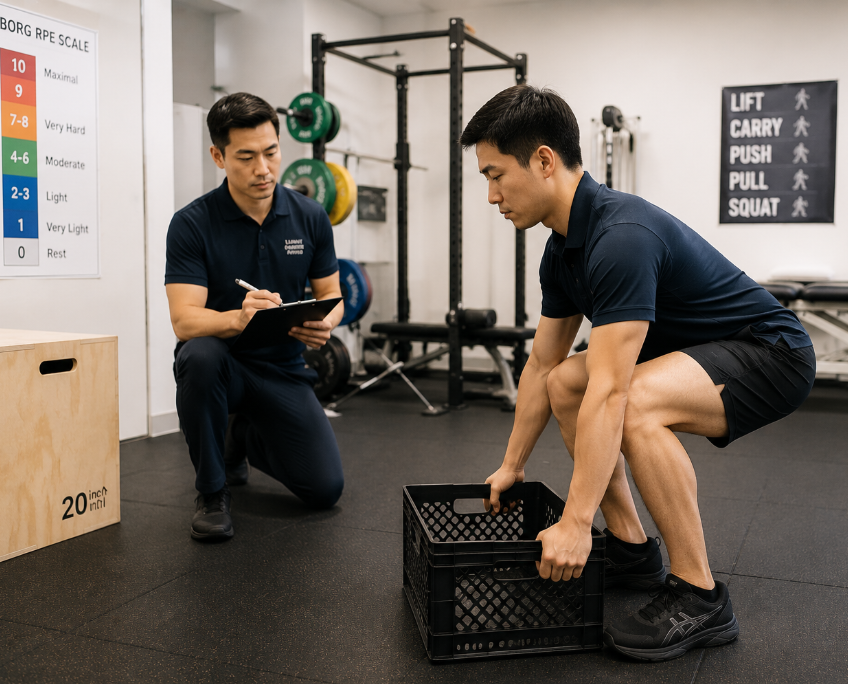
A Functional Capacity Evaluation (FCE) is a comprehensive, evidence-based assessment that measures an individual's physical capacity to safely perform work-related tasks. Using standardised testing, we evaluate the following to determine an individual's current work capability
Muscle strength
Lifting and carrying capacity
Pushing and pulling
Mobility and flexibility (range of motion)
Endurance
Functional movement patterns
FCEs are commonly used following workplace injuries to support injury management, return-to-work planning, rehabilitation, and work capacity assessments. Each evaluation is tailored to the physical demands of the individual's role, with objective findings compared against the inherent job requirements.
Following the assessment, we provide a detailed report outlining functional abilities, identified limitations, and practical recommendations to assist employers, insurers, rehabilitation providers, and treating practitioners in making informed return-to-work and rehabilitation decisions.
Ergonomic Assessments
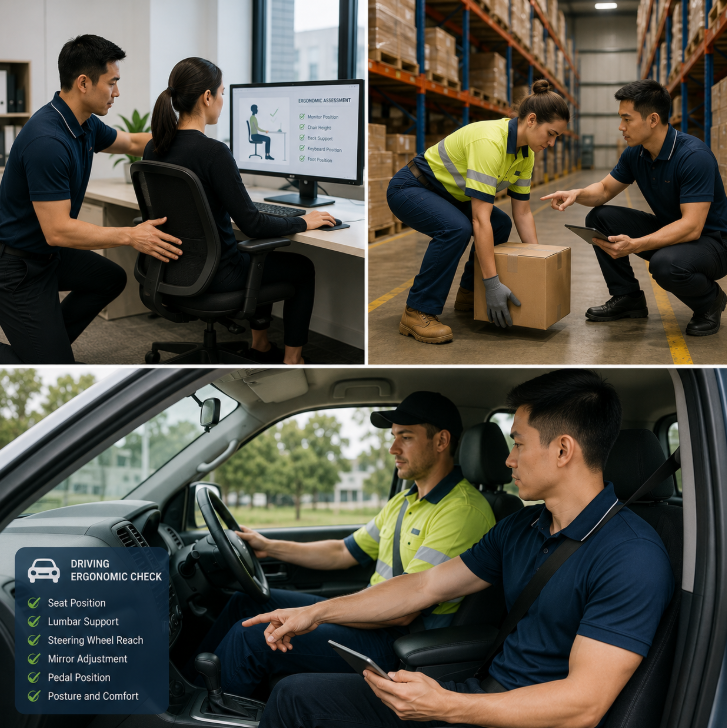
Our ergonomic assessments are designed to optimise the interaction between workers, their tasks, and their work environment, helping to reduce the risk of musculoskeletal injuries while improving comfort, efficiency, and productivity. We provide assessments for office workstations, vehicle setups, and on-site workplaces across a wide range of industries.
Office ergonomics - we assess workstation layout, chair and desk setup, monitor positioning, keyboard and mouse placement, and sitting posture to minimise strain associated with prolonged computer use.
Vehicle ergonomic assessments focus on seat positioning, steering wheel and mirror adjustments, pedal reach, and driving posture to improve comfort for employees who spend extended periods on the road.
On-site assessments evaluate manual handling tasks, work techniques, equipment use, workplace layout, and environmental factors to identify injury risks and improve work efficiency.
Following the assessment, we provide practical, evidence-based recommendations that may include workstation modifications, equipment adjustments, manual handling strategies, movement and stretching advice, and employee education. Our goal is to create safer, healthier workplaces while reducing discomfort, preventing injuries, and supporting long-term employee wellbeing.