
Clinical Pilates
What Is Clinical Pilates?
Created by Joseph Pilates over 100 years ago, Pilates was originally known as Contrology, a movement method focused on strength, control, posture, balance, flexibility, and breathing.
Today, Clinical Pilates combines these principles with modern physiotherapy and evidence-based rehabilitation to improve movement, manage pain, and optimise physical function.
Unlike traditional fitness classes, Clinical Pilates prioritises movement quality over intensity. Through controlled exercises and targeted breathing, your physiotherapist will guide you in improving core strength, posture, balance, flexibility, and muscular endurance while addressing movement patterns and muscle imbalances.
Our approach
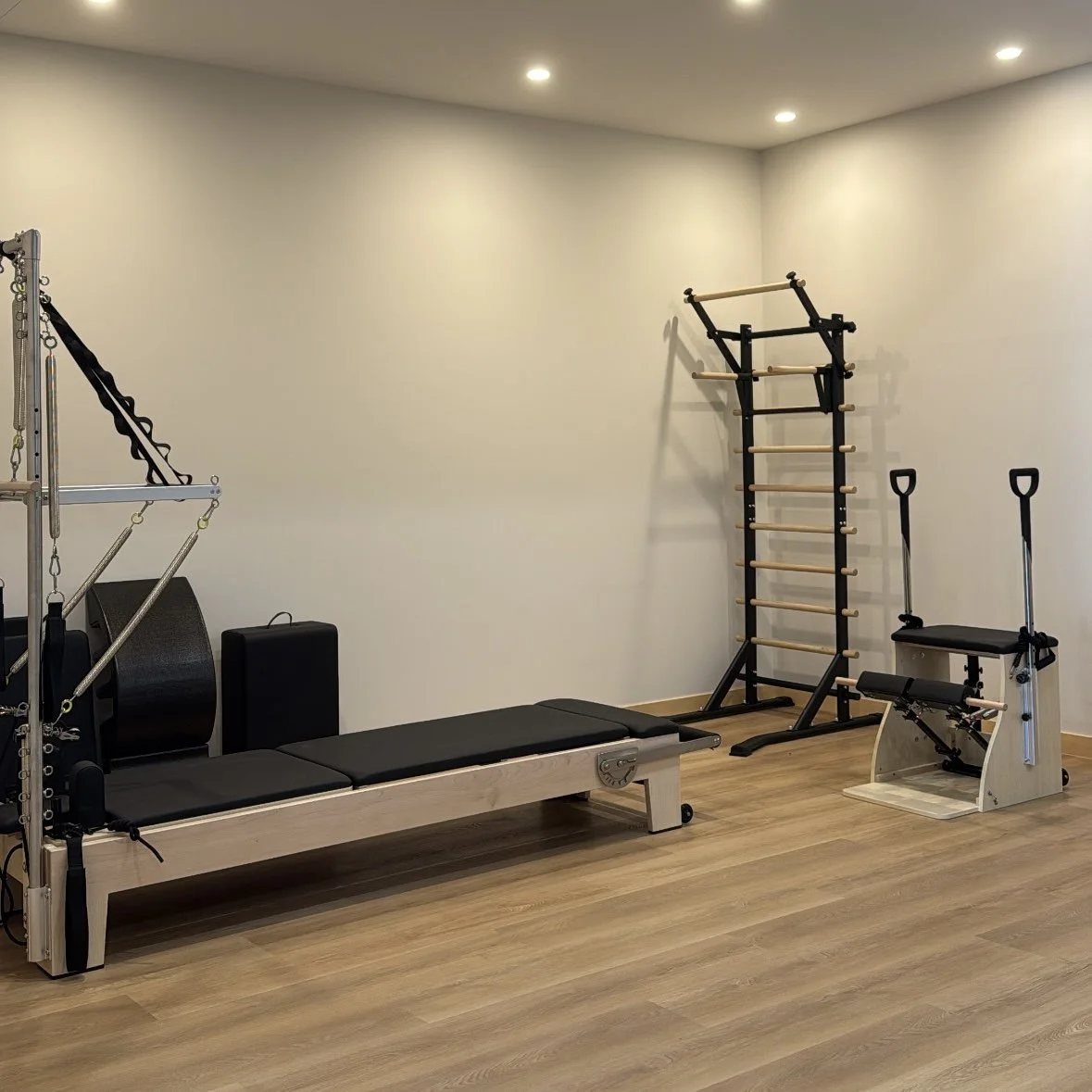
Our 1-on-one Clinical Pilates sessions combine matwork with specialised equipment, including the Reformer with Half Trapeze, Wunda Chair, Swedish Ladder, and Spine Corrector, alongside accessories such as hand weights, Pilates rings, resistance bands, jump boards, and yoga blocks.
Your physiotherapist will begin with a comprehensive assessment of your posture, muscle strength, joint mobility, and movement patterns. Each session is then tailored to your individual needs, recovery stage, and goals, with exercises progressed as your strength, stability, and movement control improve.
Whether you're recovering from an injury, managing persistent pain, improving posture, returning to sport, or simply wanting to move better, every exercise has a purpose.
Reformer Pilates
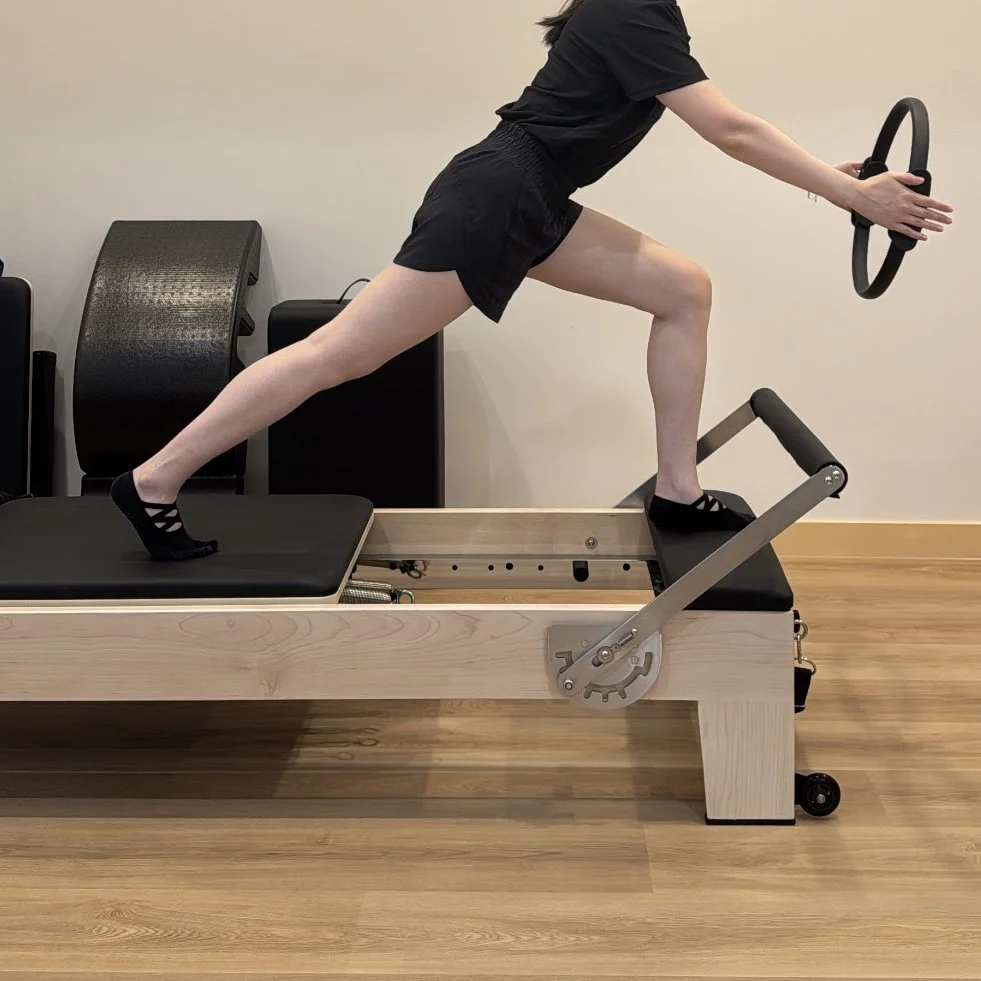
The Reformer uses an adjustable spring-resistance system and moving carriage to develop strength, core stability, flexibility, coordination, and movement control. Its versatile design allows for a wide range of exercises in lying, sitting, kneeling, and standing positions, targeting the core, hips, legs, shoulders, and upper body.
The adjustable resistance provides both assistance and challenge, allowing exercises to be adapted to different abilities and progressively advanced as strength and control improve. The Reformer is particularly useful for injury rehabilitation, post-operative recovery, chronic pain management, improving movement patterns, and developing functional strength for everyday activities, work, and sport.
Half Trapeze Pilates
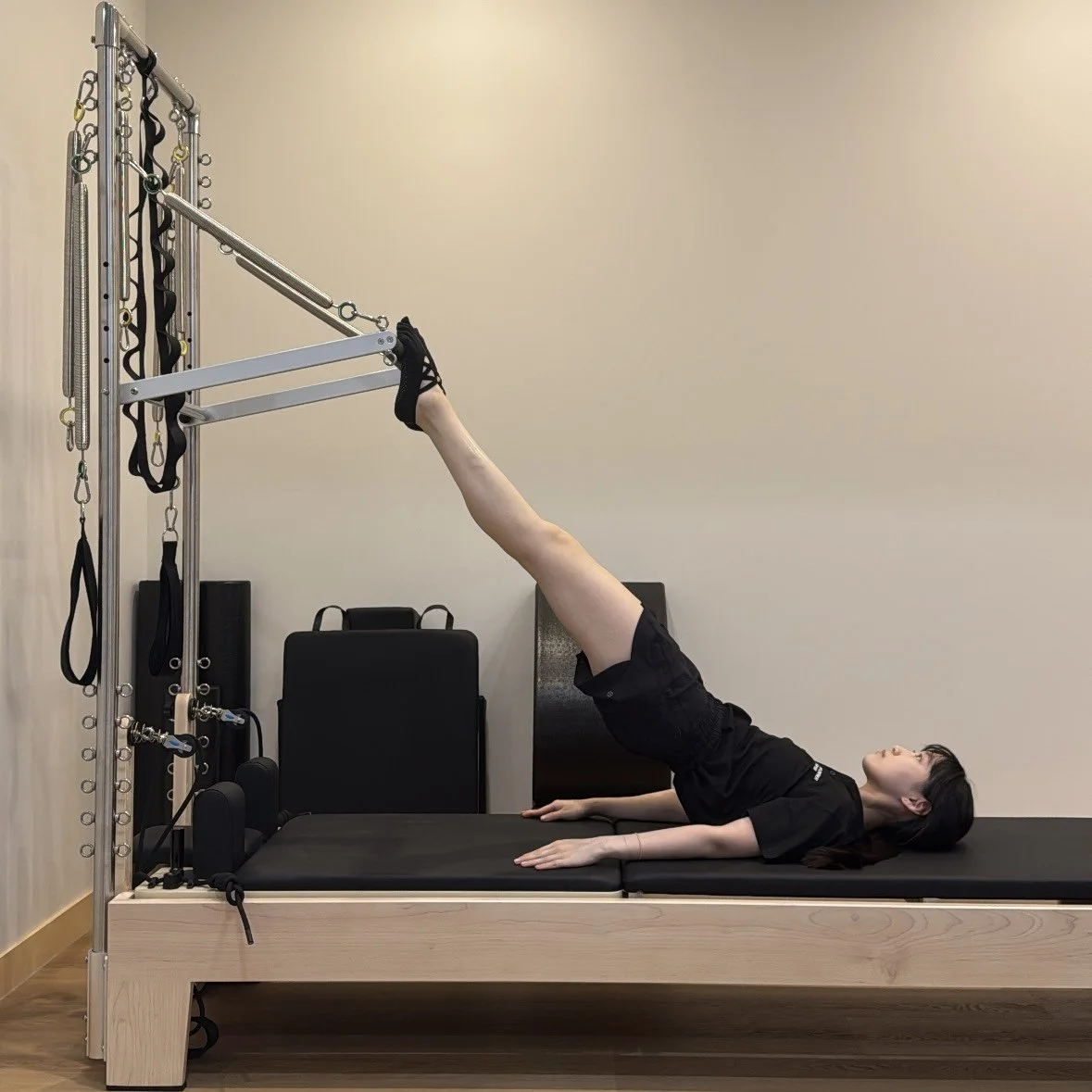
The Half Trapeze (Tower) uses a system of adjustable springs, bars, and straps to develop spinal mobility, flexibility, core stability, shoulder function, and whole-body movement control. Its versatile design supports a wide range of assisted and resisted exercises in lying, sitting, kneeling, and standing positions, targeting specific muscle groups and movement limitations.
The spring system provides both assistance and resistance, allowing exercises to be adapted to individual needs and progressively advanced as mobility, strength, and stability improve. The Half Trapeze is particularly useful for improving spinal and shoulder mobility, addressing movement restrictions, enhancing postural control, and supporting rehabilitation and functional movement training.
Wunda Chair Pilates
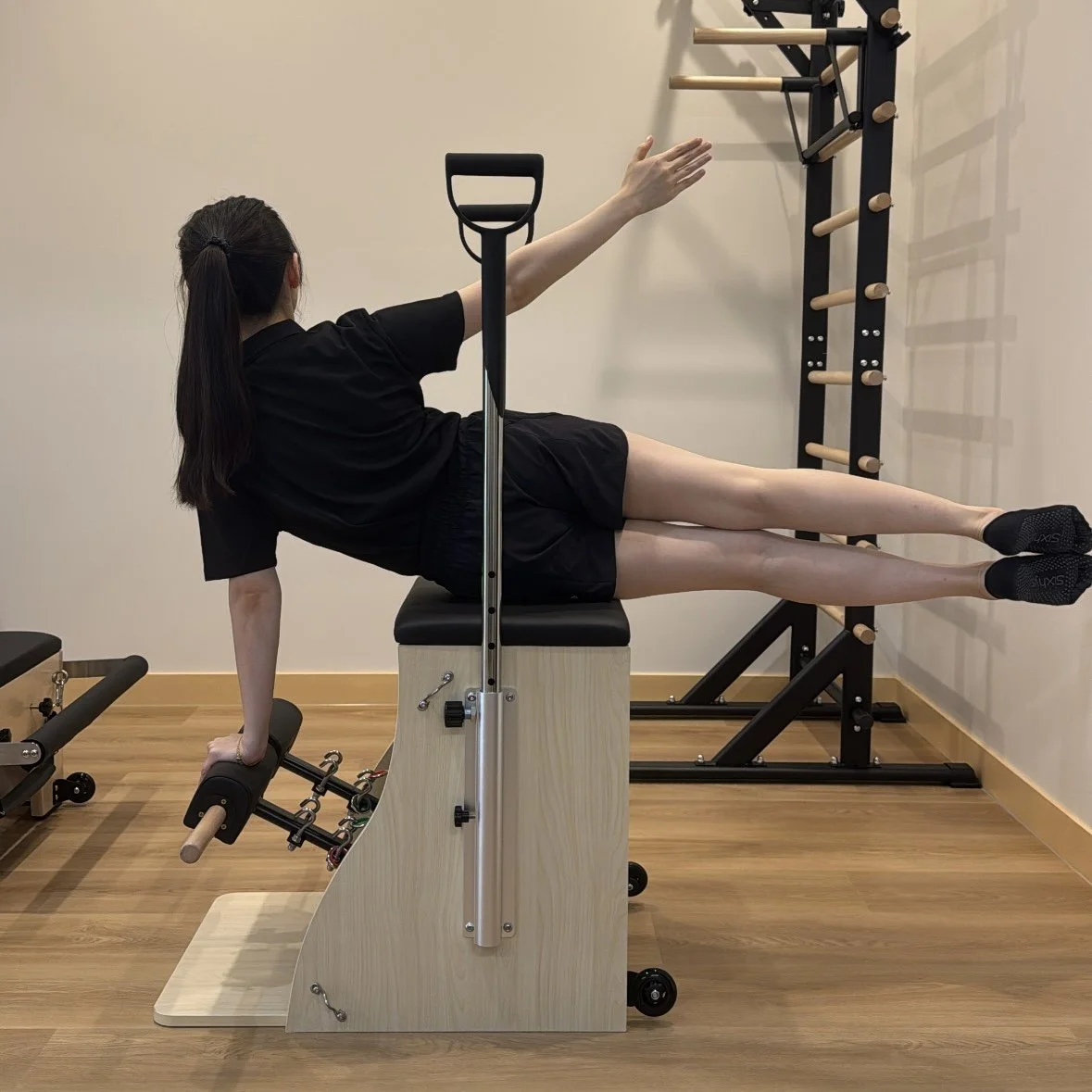
The Wunda Chair uses an adjustable spring-resistance system and pedal to develop strength, balance, coordination, and movement control. Its compact design allows for a wide range of exercises in sitting, kneeling, standing, and single-leg positions, targeting the core, hips, legs, shoulders, and upper body.
The adjustable resistance provides both assistance and challenge, allowing exercises to be tailored to different abilities and progressively advanced as strength and stability improve. The Wunda Chair is particularly useful for lower limb rehabilitation, dynamic balance training, functional strength, and preparing for the physical demands of work, daily activities, and sport.